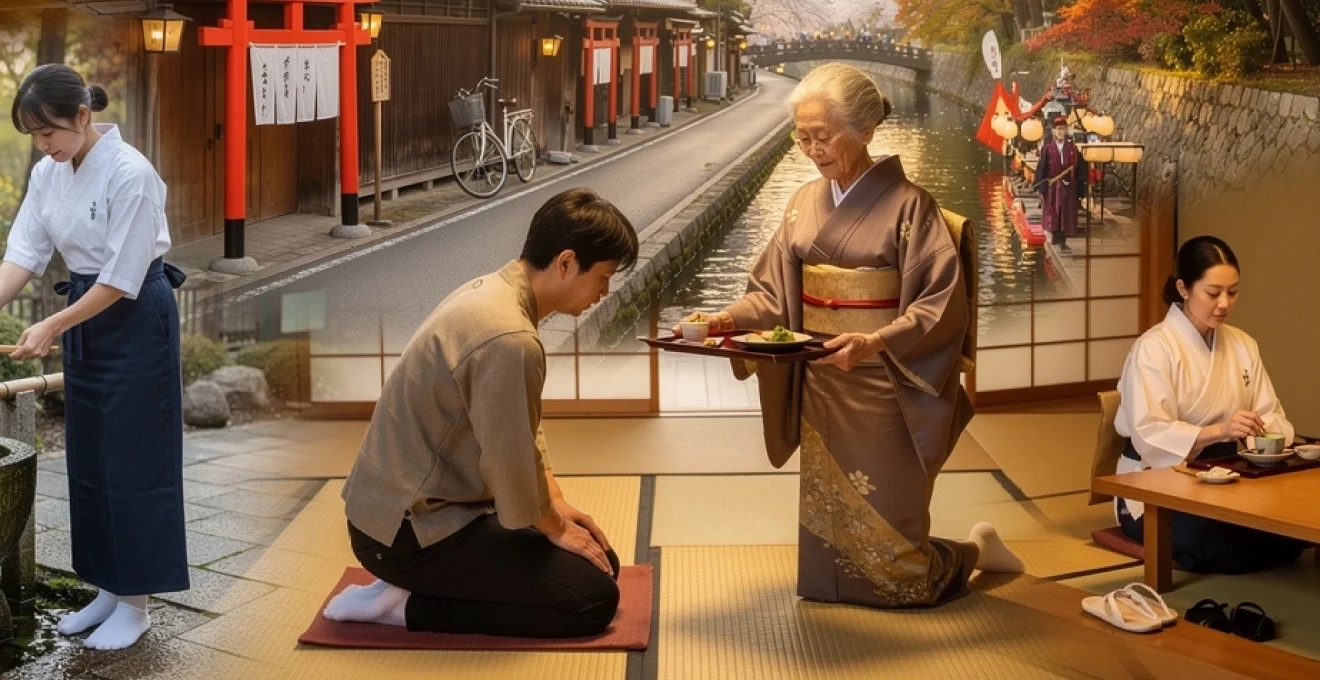
Kyoto stands as Japan’s most revered cultural capital, where centuries-old traditions seamlessly weave through daily life. This ancient imperial city demands more than casual tourism—it requires a deep understanding of cultural nuances, respect for sacred spaces, and genuine appreciation for traditional customs. Preparing for a meaningful visit involves mastering complex etiquette systems, securing authentic accommodation experiences, and understanding the profound spiritual significance embedded in every temple, garden, and traditional ceremony. The city’s 2,000 temples, historic districts, and living traditions offer transformative experiences for those who approach them with proper knowledge and reverence.
Understanding kyoto’s traditional etiquette protocols and social hierarchies
Kyoto’s social fabric operates on intricate layers of respect, hierarchy, and cultural protocol that have evolved over more than 1,000 years. The city’s residents maintain these traditions with remarkable consistency, expecting visitors to demonstrate similar awareness and consideration. Understanding these protocols becomes essential for meaningful cultural engagement, whether you’re interacting with temple monks, ryokan proprietors, or local artisans.
Mastering keigo honorific language systems in temple and ryokan interactions
The Japanese honorific language system, known as keigo, reaches its most refined expression in Kyoto’s traditional establishments. While complete fluency isn’t expected from international visitors, understanding basic honorific phrases demonstrates profound respect for local culture. Temple interactions require specific linguistic protocols, particularly when addressing monks or participating in religious ceremonies.
Essential phrases include « Gokurousama deshita » (thank you for your hard work) when acknowledging service staff at ryokan, and « Shitsurei shimasu » (excuse me for the intrusion) when entering sacred spaces. The phrase « Osewa ni narimasu » expresses gratitude for anticipated care and attention, particularly appropriate when checking into traditional accommodation. These linguistic gestures create immediate positive impressions and open doors to deeper cultural exchanges.
Navigating omakase dining etiquette in kaiseki restaurants and traditional ochaya
Kaiseki dining represents Japan’s highest culinary art form, requiring specific behavioural protocols that honour both the chef’s expertise and centuries of dining tradition. Omakase experiences in Kyoto’s finest establishments demand complete trust in the chef’s selection, with guests expected to graciously accept each course presentation without requests for modifications or substitutions.
Traditional ochaya tea houses maintain even stricter protocols, particularly those frequented by geiko and maiko. Reservations typically require introductions from existing patrons, and behaviour must remain subdued and respectful throughout the evening. Photography is generally prohibited, and conversations should focus on appreciating the entertainment rather than interrogating the performers about their lives or training.
Implementing proper bowing techniques and tatami room protocols
Bowing techniques vary significantly based on context, relationship dynamics, and the formality of situations. Temple visits require deeper, more sustained bows when approaching altars or acknowledging monks. Business card exchanges demand precise 30-degree bows while maintaining eye contact until the bow’s completion. Seiza sitting positions on tatami mats require practice and patience, as improper positioning can cause discomfort and appear disrespectful.
Tatami room protocols extend beyond simple shoe removal to encompass walking patterns, sitting arrangements, and furniture interaction. Never step on tatami borders, always sit in designated positions relative to the tokonoma alcove, and avoid pointing feet toward other occupants. These seemingly minor details carry significant cultural weight and demonstrate genuine commitment to respecting Japanese traditions.
Observing shrine purification rituals at fushimi inari and kiyomizu-dera
Purification rituals at Kyoto’s major temples and shrines follow specific sequences that visitors must observe carefully. At Fushimi Inari, the temizu cleansing ritual requires washing hands and mouth in a prescribed order before approaching the main shrine. Use the ladle with your right hand to pour water over your left hand, then switch hands and repeat. Rinse your mouth by pouring water
into your left hand into the palm, never directly into your mouth, and discreetly spit the water beside the basin, not back into it. Finally, let remaining water run down the handle to cleanse it before returning the ladle. At Kiyomizu-dera, you will also encounter the Otowa Waterfall, where visitors drink from three separate streams for health, longevity, or academic success. Choose only one stream, as drinking from all three is considered greedy, and avoid letting your lips touch the shared ladles. By following these shrine purification rituals with quiet focus, you signal that you recognise these spaces as living places of worship, not just scenic backdrops for photographs.
Securing authentic accommodation in historic kyoto districts
Accommodation in Kyoto is not merely a place to sleep; it is one of the most direct ways to experience traditional culture and social etiquette. From wooden machiya townhouses in Gion to riverside ryokan in Arashiyama, each lodging type encodes a different layer of Kyoto’s history. Choosing where to stay therefore shapes how deeply you engage with the city’s rhythms and customs. As visitor numbers have surged in recent years, securing authentic accommodation requires advance planning, careful research, and an understanding of what “traditional” truly means in a Kyoto context.
Booking traditional machiya townhouses in gion and pontocho quarters
Traditional machiya townhouses, with their lattice wood facades and long, narrow floor plans, offer one of the most immersive ways to stay in Kyoto’s historic core. In Gion and Pontocho, many of these structures date back to the late Edo and Meiji periods, and their preservation is tightly regulated to protect Kyoto’s urban heritage. When you book a machiya, you are not just renting a stylish holiday home; you are temporarily inhabiting an architectural artifact woven into the neighbourhood’s social fabric. This demands quieter behaviour, careful waste separation, and strict respect for local rules about noise and street congestion.
To secure an authentic machiya experience, prioritise properties managed by Kyoto-based preservation groups or long-standing local companies, rather than purely profit-driven short-term rental platforms. Look for listings that provide detailed information about building history, tatami maintenance, and fire safety—Kyoto’s wooden districts are particularly vulnerable, so regulations are strict. High-quality operators often cap guest numbers, prohibit large group gatherings, and provide bilingual house manuals explaining how to use delicate features such as shoji paper doors and traditional baths. Booking at least three to six months in advance, especially for cherry blossom or autumn foliage seasons, greatly increases your chances of finding a machiya that honours both heritage and residential tranquillity.
Selecting certified ryokan with authentic omotenashi service standards
Ryokan stays epitomise Kyoto’s refinement, where hospitality—omotenashi—is expressed through every detail, from the layout of seasonal kaiseki dinners to the fold of your yukata. Yet not all properties marketed as “ryokan” maintain the same standards of authenticity. In central districts like Higashiyama and Arashiyama, seek out long-established inns registered with local hotel associations or recognised in reputable guidebooks that evaluate service quality rather than just aesthetics. These certified ryokan tend to employ multi-generational staff who have internalised Kyoto-style courtesy, including the nuanced use of keigo and discreet, anticipatory service.
Before booking, study room descriptions carefully: true ryokan will feature tatami flooring, futon bedding laid out each evening, communal or private ofuro baths, and multi-course kaiseki dinners highlighting regional produce. Many will also outline house etiquette on their websites, from bathing protocols to check-in timing, which is often earlier than Western hotels to accommodate dinner service. Contacting the ryokan directly by email to confirm dietary requirements or arrival times not only builds rapport but also reflects the long-standing Kyoto custom of relationship-based hospitality. By choosing such establishments, you encourage the preservation of rigorous omotenashi service standards rather than diluted, mass-market versions of “Japanese-style” lodging.
Evaluating shukubo temple lodging options at nanzen-ji and chion-in
Shukubo temple lodgings allow visitors to step inside the daily rhythms of Buddhist practice, transforming a simple overnight stay into a spiritual immersion. While famous complexes like Nanzen-ji and Chion-in sit at the heart of Kyoto’s religious landscape, not every sub-temple is open for accommodation, and availability often fluctuates with renovations or event schedules. When researching shukubo, focus on official temple websites or Kyoto tourism channels that clearly state whether lodging is currently accepted, what languages are supported, and which rituals guests may join.
Staying at a temple typically involves early-morning sutra chanting, vegetarian shojin ryori meals, and shared facilities with simple bedding. Expect stricter curfews, limited or no alcohol, and quiet hours to respect monks’ routines. Ask yourself: are you prepared to adapt to this tempo, waking before dawn and embracing silence as part of the experience? If yes, shukubo can provide insight into Kyoto’s spiritual backbone that no standard hotel can match. When evaluating options, prioritise temples that clearly explain behavioural guidelines, clothing expectations for ceremonies, and whether photography is allowed anywhere on the grounds; this clarity helps you arrive prepared and avoid inadvertent disrespect.
Identifying family-run minshuku guesthouses in higashiyama district
For travellers seeking a balance between formality and warmth, family-run minshuku guesthouses in Higashiyama offer intimate windows into everyday Kyoto life. Unlike ryokan, which can feel akin to small luxury hotels, minshuku are closer to homestays, often run by older couples who cook simple, seasonal meals and personally handle check-in and cleaning. You might share a bathroom with other guests, eat breakfast at a communal table, and swap travel stories in the evening, all within walking distance of iconic sites like Kiyomizu-dera and Yasaka Pagoda.
To identify genuine minshuku, sift through Japanese-language booking sites or local tourism offices that list smaller, family-operated properties rarely found on global platforms. Reviews mentioning multi-decade operation, home-cooked meals, and personalised sightseeing advice are good indicators of authenticity. Because many owners may speak limited English, prepare key phrases in Japanese—“Yoyaku o onegaishimasu” (I’d like to make a reservation) or “Shokuji-tsuki desu ka?” (Are meals included?)—and be punctual for agreed meal times. In return, you benefit from insider recommendations, nuanced cultural explanations, and the chance to observe how Kyoto residents quietly integrate tradition into modern domestic life.
Participating respectfully in kyoto’s seasonal matsuri and cultural ceremonies
Kyoto’s calendar is punctuated by seasonal matsuri and rituals that have shaped community identity for centuries. These events attract increasing numbers of international visitors, yet they remain, first and foremost, for local worshippers and neighbourhoods. Approaching festivals as invited observers rather than as consumers of spectacle changes how you stand, move, and even breathe within the crowds. Whether you are watching towering Gion Matsuri floats or sitting through a formal tea ceremony, your awareness of context and protocol determines whether your presence harmonises with or disrupts the occasion.
Attending gion matsuri festival protocol and yamaboko float ceremonies
Gion Matsuri, held throughout July, is Kyoto’s most famous festival, centred on elaborate yamaboko floats that roll through downtown streets. While the main processions draw global media attention, much of the festival’s meaning unfolds in quieter neighbourhood rituals, shrine visits, and float-building preparations. As a visitor, your role is to witness these layered traditions while minimising your footprint on already crowded streets. That means arriving early, following police and volunteer instructions, and avoiding pushing or blocking local residents trying to access their homes or workplaces.
During evening yoiyama celebrations, when floats are lit and side streets fill with food stalls, photography etiquette becomes especially important. Avoid using flash in close proximity to performers or children in yukata, and never climb onto steps, fences, or shop fronts for a better view. Some floats allow visitors to board after a donation; if you do, remove your shoes, step carefully on the wooden planks, and listen to staff for directions on where to sit or stand. Remember that these floats are not parade props but sacred vehicles for deities—treating them with museum-level care and attention shows you understand their status within Kyoto’s spiritual geography.
Observing tea ceremony etiquette in urasenke and omotesenke schools
Kyoto is home to the major tea schools Urasenke and Omotesenke, whose lineages trace back to Sen no Rikyu and the codification of chanoyu. Participating in a formal lesson or demonstration with these schools is akin to attending a performance and philosophy seminar in one. You are entering a space where even the way you slide a door or rotate a bowl carries meaning. Nervous about making a mistake? That anxiety is normal, and most hosts appreciate honest effort more than perfection.
Key points of tea ceremony etiquette include arriving early, dressing modestly with minimal fragrance, and silencing all devices before entering the tearoom. When served matcha, bow to the host, rotate the bowl slightly so the front design does not touch your lips, and take a few measured sips before wiping the rim and placing the bowl back with its front facing the host. Questions are best saved for designated moments, often after the ceremony, and should focus on aesthetics, seasonal elements, or the philosophy behind certain gestures, rather than pricing or commercial details. Approached this way, tea ceremony in Kyoto ceases to be a staged “experience” and becomes a deep lesson in humility, presence, and intentional design.
Participating in hanami rituals at philosopher’s path and maruyama park
Cherry blossom season transforms Kyoto into a living painting, especially along the Philosopher’s Path and in Maruyama Park. Yet hanami—flower viewing—is not merely a photoshoot opportunity; it is a ritual of impermanence, conviviality, and seasonal gratitude. Locals often reserve spots hours in advance with picnic sheets, sharing food and drinks through the day and into the night. As a visitor, you join this temporary community and are expected to preserve the shared space with care.
At popular spots like Maruyama Park, follow posted rules about alcohol, smoking, and music volume, which can change from year to year as authorities respond to crowding. Avoid shaking branches for falling petals or stepping into roped-off areas to capture “unique” shots; think of the trees as elderly relatives whose dignity must be preserved. When walking the Philosopher’s Path, keep to one side to allow others to pass, and resist the urge to eat while walking—find a bench, sit, and give both the food and blossoms your full attention. By aligning with these subtle hanami customs, you experience Kyoto’s famous cherry blossoms as locals intend: not just as scenery, but as a shared, fleeting moment of beauty.
Following momijigari autumn viewing customs at tofuku-ji and eikan-do
Autumn in Kyoto brings momijigari, the “hunting” of red maple leaves, with Tofuku-ji and Eikan-do among the most sought-after destinations. Bridge viewpoints and temple verandas can become intensely crowded, especially on peak weekends, which makes personal spatial awareness even more critical. Think of your body as part of the landscape design: how you move, pause, and photograph should enhance, not fracture, the collective experience. Standing still in narrow corridors for extended photoshoots or sprawling across railings for selfies disrupts not only flow but also the contemplative atmosphere.
At Tofuku-ji’s Tsutenkyo Bridge, follow the established walking direction and avoid backtracking, even if you feel you missed the “perfect” angle. Eikan-do’s illuminated night openings are particularly sensitive to noise; keep conversations low, and let the scripted lighting sequence guide your pace. Dropped leaves are part of the aesthetic composition—resist the urge to collect armfuls as souvenirs, and instead take close-up photographs or buy locally made momiji-themed crafts. In doing so, you honour the idea that the landscape is a temporary art installation co-created by nature, monks, and visitors across time.
Engaging with traditional artisan communities and craft workshops
Kyoto’s cultural depth is sustained not only by temples and festivals, but by its living artisan communities—potters, textile dyers, lacquerware masters, and paper makers whose skills often span generations. Engaging with these craftspeople offers a rare chance to see how tradition is continually reinterpreted rather than frozen in time. Yet studio visits and workshops must be approached as invitations into working environments, not open showrooms designed for constant foot traffic. Your curiosity is welcome, but it must be balanced with sensitivity to the slow, precise processes unfolding around you.
Before visiting a workshop, check whether appointments are required; many Kyoto artisans operate in small spaces where unannounced groups can be overwhelming. During demonstrations, avoid interrupting key steps—especially those involving fire, glazes, or delicate textiles—and save non-essential questions for natural pauses. When participating in hands-on experiences, such as indigo dyeing or kintsugi gold repair, treat tools and materials with the same care you would in a laboratory: follow instructions exactly, and inform the instructor if you feel unsure at any stage. Payment is another key aspect of respectful engagement; bargaining is uncommon in Japan, particularly for handcrafts, so prices should be taken as reflections of time, training, and material costs rather than starting points for negotiation.
Choosing where to spend your money has preservation impact. Prioritise studios that clearly credit their makers, explain production methods, and avoid mass-produced imports labelled as “Kyoto-style.” If you are uncertain, ask how long a single piece takes to complete or whether the workshop trains apprentices—answers to these questions often reveal the difference between an authentic craft line and a purely commercial souvenir shop. Over time, such intentional support helps keep traditional techniques economically viable, ensuring that the ceramic bowls in tea houses or the fabrics in kimono experiences still originate from genuine Kyoto craftsmanship rather than generic factories.
Implementing sustainable tourism practices in historic preservation areas
As of the mid-2020s, Kyoto receives over 50 million domestic and international visitors annually in peak years, placing immense pressure on its historic districts and fragile wooden architecture. Sustainable tourism here is not an abstract ideal; it is a daily necessity to prevent over-tourism from eroding the very atmosphere travellers come to enjoy. Responsible behaviour ranges from the obvious—proper waste disposal, reduced plastic use—to more subtle acts, such as choosing less crowded visiting hours or limiting short-stay turnover in residential neighbourhoods. The question to keep asking is: how can you enjoy Kyoto in a way that leaves its streets, shrines, and communities slightly better, or at least no worse, than you found them?
In preservation zones like Gion, Higashiyama, and Arashiyama, municipalities have introduced specific guidelines, including restrictions on eating while walking, bans on sitting on private steps, and fines for harassing geiko and maiko. Familiarise yourself with posted signs and online resources before you arrive, then go one step further by modelling best practices for fellow visitors. Opt for public transport, walking, or cycling when possible; Kyoto’s compact size and extensive bus and subway network make car-free travel both practical and pleasant. Consider visiting marquee sights at off-peak times—early mornings or evenings—and exploring lesser-known temples and gardens in between. This not only enhances your own experience but helps distribute visitor load more evenly across the city.
Accommodation choices also feed into sustainability. Renting entire homes in tightly packed residential alleys can create tension if guests ignore quiet hours or waste-sorting rules. Selecting licensed properties that clearly explain neighbourhood expectations helps protect local quality of life. Finally, support businesses that demonstrate environmental responsibility, such as tea houses using local, seasonal ingredients or shops that minimise packaging. Sustainable tourism in Kyoto is like participating in a long-running Noh play: countless actors have preserved the script and staging for centuries, and your role—though brief—still affects the integrity of the performance.
Managing digital etiquette and photography restrictions in sacred spaces
In an age where every moment can be broadcast instantly, Kyoto’s temples and shrines invite a different kind of attention—one rooted in stillness rather than constant documentation. Digital etiquette here is about more than obeying “no photo” signs; it is about recognising that not all beauty exists to be captured, shared, and monetised online. Many sacred sites have tightened photography rules in recent years, not out of hostility to visitors, but in response to repeated disruptions: blocked pathways, intrusive flashes during prayer, and commercial shoots masquerading as casual tourism. Understanding and respecting these boundaries is now a central part of preparing for a culturally immersive stay in Kyoto.
Before raising your camera or phone, pause and scan the environment for pictograms or text indicating restrictions—these may appear at entrances, ticket counters, or specific halls rather than across the entire complex. In some locations, outdoor photography is allowed while indoor areas, altars, and ritual performances are off-limits. Even where photos are technically permitted, ask yourself: will this shot disturb someone else’s experience? If you must take a picture in a narrow corridor or at a popular viewpoint, step aside quickly afterward, keeping your shoot to a few seconds rather than minutes. Tripods, drones, and selfie sticks are increasingly banned in heritage areas because they create physical hazards and visual clutter; leaving them at your accommodation will simplify your visit and reduce the risk of conflict.
Managing digital presence also extends to sound and privacy. Keep phones on silent—not vibrate—in worship spaces, and resist the urge to answer calls in temple gardens or quiet lanes; stepping outside to a busier street before speaking is a small but meaningful courtesy. When photographing people, especially monks, locals in kimono, or geiko and maiko, always ask permission first, and accept “no” gracefully. In Gion and surrounding districts, approaching geisha for photos is specifically discouraged and in some alleys prohibited by local ordinance. Think of your camera as a guest in Kyoto as much as you are: it should behave with restraint, sensitivity, and an awareness that some moments are meant to be lived fully once, then carried home only in memory.