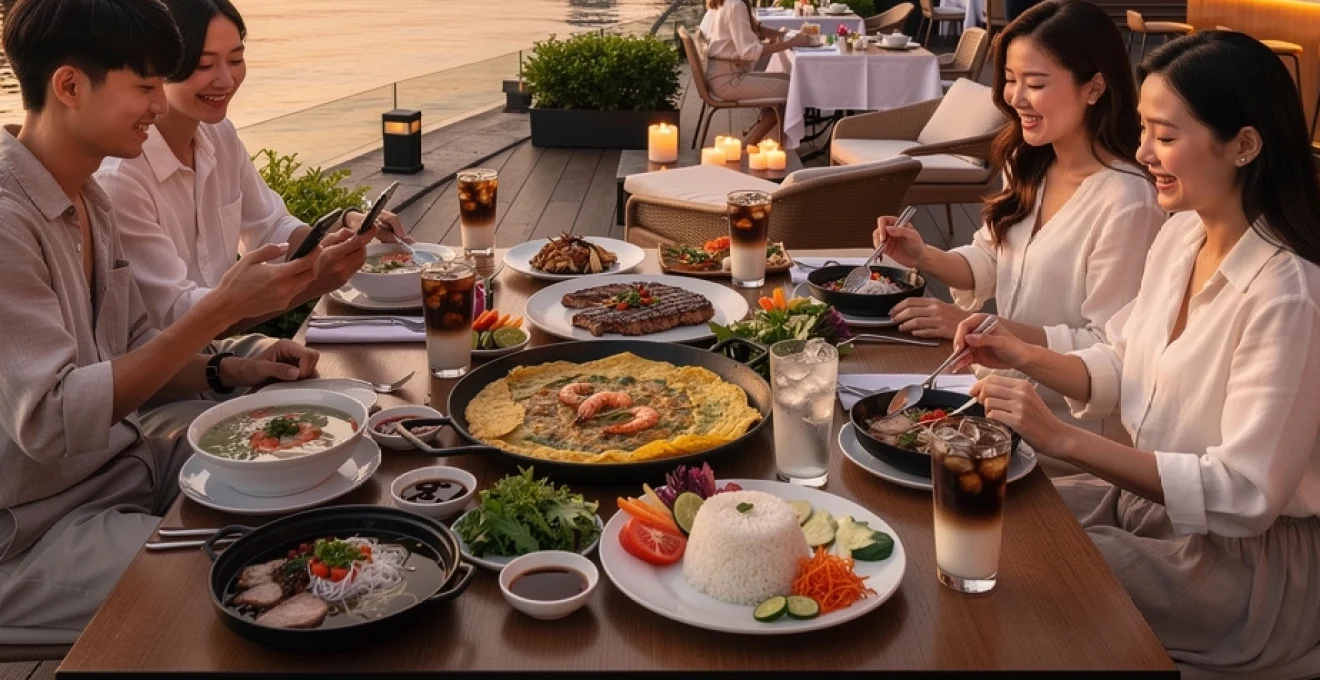
Ho Chi Minh City’s culinary landscape extends far beyond its famous street food vendors, encompassing sophisticated riverside dining establishments that showcase Vietnam’s gastronomic heritage alongside contemporary international cuisine. The Saigon River, winding through the city’s heart, has become a focal point for premium dining experiences where traditional Vietnamese flavours meet modern culinary innovation. With the city’s rapid development, waterfront districts have transformed into destination dining precincts that attract both discerning locals and international visitors seeking authentic experiences paired with stunning vistas. The convergence of fresh Mekong Delta produce, centuries-old cooking traditions, and contemporary presentation creates a dining scene that honours Vietnam’s past whilst embracing its cosmopolitan future.
Saigon river waterfront restaurant precincts and culinary districts
The Saigon River has emerged as the defining geographical feature shaping Ho Chi Minh City’s premium dining landscape. Unlike the bustling street food districts that characterise much of the city’s culinary identity, the riverside areas offer more refined dining environments where atmosphere and presentation complement exceptional food quality. These waterfront precincts have developed distinct personalities, each attracting different demographics and offering unique culinary perspectives on Vietnamese and international cuisine.
Bach dang wharf fine dining establishments along ton duc thang street
Bach Dang Wharf represents the historical heart of Saigon’s riverfront dining scene. Along Ton Duc Thang Street, elegant establishments occupy prime positions overlooking the river’s southern curve, where cargo vessels and tourist boats create a constantly changing backdrop. These restaurants typically feature multi-storey designs that maximise river views, with open-air terraces that capture evening breezes—a crucial consideration in Saigon’s tropical climate. The culinary offerings here tend towards upscale Vietnamese cuisine with French influences, reflecting the area’s colonial heritage and the sophisticated tastes of the clientele who frequent these establishments.
Many restaurants in this district specialise in seafood preparations that showcase techniques from Vietnam’s extensive coastline. Fresh catches from the South China Sea arrive daily, prepared using methods that range from traditional Vietnamese steaming and grilling to contemporary fusion approaches. The proximity to District 1’s business centres means lunch services cater to corporate clientele, whilst evenings attract couples and families seeking special occasion dining experiences.
Thu thiem peninsula emerging gastronomic quarter
Across the river from District 1, Thu Thiem Peninsula represents Ho Chi Minh City’s culinary future. This rapidly developing area has attracted investment from international restaurant groups and innovative local chefs who recognise the potential of relatively affordable riverside real estate combined with spectacular views back towards the city’s evolving skyline. The gastronomic establishments here tend towards contemporary design aesthetics, with floor-to-ceiling glass walls and minimalist interiors that allow the panoramic vistas to dominate.
What distinguishes Thu Thiem’s dining scene is its willingness to experiment with non-traditional concepts. You’ll find restaurants serving modern interpretations of Vietnamese classics alongside establishments offering cuisines rarely seen elsewhere in the city. The area’s development coincided with Vietnam’s growing middle class developing more adventurous dining preferences, and restaurateurs have responded with venues that challenge conventional expectations whilst maintaining respect for quality ingredients and skilled preparation.
Binh quoi tourist village traditional floating restaurants
For visitors seeking authentic Vietnamese dining experiences in natural settings, Binh Quoi Tourist Village offers something markedly different from the urban sophistication of central riverside districts. Located approximately 8 kilometres from the city centre along a quieter stretch of the Saigon River, this area features traditional floating restaurants constructed from bamboo and palm thatch that evoke the Mekong Delta’s architectural heritage.
The dining experience at Binh Quoi emphasises traditional Southern Vietnamese cuisine prepared using time-honoured methods. Whole fish grilled over coconut husk charcoal, clay pot dishes simmered for hours, and elaborate vegetable preparations showcase the region’s agricultural abundance. Many establishments offer set menus featuring multiple courses that introduce diners to the breadth of Vietnamese culinary traditions, from delicate spring rolls to robust braised dishes. The setting, surrounded by tropical gardens and accessed via small bridges over tributaries, provides immersive cultural experiences that transport diners away from the city’s
centre and towards a calmer, riverside atmosphere. Because many of the restaurants are set within landscaped grounds, Binh Quoi is particularly appealing for families with children and for travellers who want to experience a slice of countryside culture without leaving Ho Chi Minh City. Evening buffet services, folk music performances and traditional games often accompany the dining experience, turning a simple meal into a broader immersion in Southern Vietnamese life.
Practical considerations for Binh Quoi include planning transport and timing. The area is best visited in the late afternoon or early evening, when temperatures begin to drop and the river breeze becomes more noticeable. You should also be prepared for set-menu pricing structures that may be higher than casual street food but still offer excellent value compared with similar themed venues in other Asian cities. As with most riverside dining in Ho Chi Minh City, reservations for weekends and public holidays are advisable, especially if you are seeking a table with direct water views.
An phu waterfront dining corridor in district 2
Continuing further upstream, the An Phu waterfront dining corridor in District 2 (often overlapping with the Thao Dien neighbourhood) has become one of Ho Chi Minh City’s most cosmopolitan riverside dining zones. Here, low-rise villas, stylish bistros and garden restaurants line quieter branches of the Saigon River, creating an atmosphere that feels markedly more relaxed than downtown District 1. The mix of expatriate residents and affluent locals has encouraged a diverse culinary scene, from contemporary Vietnamese tasting menus to international concepts such as Mediterranean tapas, Japanese izakaya and modern Australian grills.
Outdoor terraces, private jetties and riverside lawns are key design elements in An Phu’s restaurants, making this corridor especially attractive for sunset dining and weekend brunch. Many venues offer family-friendly facilities, including play areas and spacious gardens, so you can enjoy a slow meal while children have room to move. Because District 2’s road network has improved significantly in recent years, it is now relatively straightforward to reach these restaurants by taxi or ride-hailing services; travel times from central District 1 can be as short as 20 minutes outside peak traffic hours.
An Phu is also at the forefront of sustainability-focused riverside dining in Ho Chi Minh City. Several establishments source vegetables and herbs from on-site gardens or nearby organic farms, while seafood menus often highlight responsibly sourced river fish and shellfish from the Mekong Delta. If you are interested in pairing riverside views with modern Vietnamese cuisine that emphasises traceable, seasonal produce, this dining corridor should be high on your itinerary. As always, checking opening hours and making advance bookings—especially for weekend evenings—is recommended to secure prime riverside tables.
Signature vietnamese delicacies and regional specialties unique to ho chi minh city
While riverside restaurants provide the setting, it is the city’s distinctive dishes that truly define the Ho Chi Minh City dining experience. Many travellers arrive familiar with pho or banh mi, yet soon discover that Saigon has its own repertoire of regional specialties and Southern-style variations that rarely appear on menus elsewhere in Vietnam. Understanding these local delicacies not only enriches your culinary exploration but also helps you order more confidently when faced with extensive, Vietnamese-language menus.
The city’s position as a crossroads between the Mekong Delta, the Central Highlands and the broader Southeast Asian region has shaped a food culture that is both eclectic and deeply rooted in tradition. Influences from Cambodian, Chinese and Chaozhou communities sit alongside French colonial legacies, resulting in dishes that blend techniques and ingredients in subtle ways. As you dine along the Saigon River or at bustling markets, you will notice that many of the most memorable meals revolve around noodles, rice-based dishes and intense broths—each prepared with local flair and a strong emphasis on fresh herbs.
Hu tieu nam vang phnom penh-style rice noodle heritage
Hu tieu Nam Vang is one of Ho Chi Minh City’s most emblematic noodle dishes, yet it is surprisingly underrepresented abroad. Originating from Phnom Penh and adapted by Chinese-Cambodian migrants, this Phnom Penh–style rice noodle soup has been fully adopted into the city’s culinary identity. The dish typically features a clear, pork-based broth poured over chewy rice noodles, topped with a combination of sliced pork, minced meat, shrimp and sometimes quail eggs or liver, reflecting the city’s rich migrant history in every bowl.
What sets Saigon’s hu tieu Nam Vang apart from other Vietnamese noodle soups is its customisation and dual serving styles. You can enjoy it as a traditional soup or order the “kho” (dry) version, where the noodles are dressed in a savoury-sweet sauce and the broth is served on the side. This flexibility allows you to adjust flavours, adding chilli, lime, pickled garlic or chilli vinegar until the balance suits your palate. For riverside dining, some contemporary restaurants present hu tieu Nam Vang with refined plating, yet many residents still insist the most authentic versions come from humble shophouses and morning markets.
If you are trying hu tieu Nam Vang for the first time, consider visiting a local institution in District 5 or District 10 during breakfast or early lunch, when the broth is freshest and the atmosphere liveliest. As with many noodle dishes in Ho Chi Minh City, turnover is rapid; high customer volume helps ensure ingredients remain fresh and broths are constantly replenished. Think of hu tieu Nam Vang as Saigon’s answer to a classic chicken noodle soup: comforting, adaptable and deeply woven into everyday life.
Banh xeo crispy coconut pancakes at banh xeo 46a
Banh xeo, the iconic crispy Vietnamese savoury pancake, takes on a distinctive Southern character in Ho Chi Minh City. Larger and thinner than their Central Vietnamese counterparts, Saigon-style banh xeo are typically made with a batter of rice flour, turmeric and coconut milk, yielding a crisp, golden crepe that crackles when you break it apart. Filled with a combination of pork, shrimp and bean sprouts, these pancakes are designed to be shared, wrapped in lettuce and herbs, then dipped into a light, tangy nuoc cham sauce.
Among the many places to sample this dish, Banh Xeo 46A has achieved almost legendary status. Tucked away in a side street not far from central District 1, this long-running eatery has been serving sizzling pancakes to locals, office workers and visiting food enthusiasts for decades. The open kitchen allows you to watch as cooks skilfully swirl batter in large pans, an almost theatrical performance that underscores the dish’s reliance on timing and technique. Their banh xeo are known for being especially light and crisp, with generous fillings that remain juicy rather than greasy.
When you visit Banh Xeo 46A or a similar specialist, remember that much of the enjoyment comes from assembling each bite yourself. You tear off a portion of pancake, add fresh herbs, perhaps a slice of cucumber or pickled carrot, then roll everything in mustard or lettuce leaves before dipping. The experience is a little like building your own taco, but with Vietnamese flavours and textures; this interactive style makes banh xeo an excellent choice for groups or families. To avoid long waits, aim to arrive outside peak dinner hours, and do not hesitate to ask staff to demonstrate the recommended way of eating if you feel unsure.
Com tam suon nuong broken rice with grilled pork preparation techniques
Com tam suon nuong, or broken rice with grilled pork, is arguably Ho Chi Minh City’s most beloved everyday meal. Originally created as a practical way to use fractured rice grains left over from milling, com tam has evolved into a signature Saigon comfort food. The broken grains have a pleasantly irregular texture—softer than long-grain rice yet still distinct—that pairs especially well with marinated grilled pork chops, shredded pork skin and a fried egg.
The heart of excellent com tam lies in the preparation of the suon nuong (grilled pork). Cooks typically marinate thin-cut pork chops in a mixture of fish sauce, garlic, sugar, lemongrass and sometimes honey or condensed milk, which helps create a caramelised crust when grilled over charcoal. This combination of sweet, salty and smoky flavours is a hallmark of Southern Vietnamese cooking. Many vendors fan the coals by hand, carefully monitoring heat to ensure the meat remains tender while acquiring a characteristic charred edge.
When you order com tam in Ho Chi Minh City, you will usually receive a plate layered with rice, pork chop, pickled vegetables, cucumber and tomato, along with a small bowl of nuoc cham to drizzle over everything. Some riverside restaurants interpret the dish more elaborately, adding house-made pork meatloaf, grilled prawns or even foie gras in high-end versions, yet the fundamentals remain unchanged. For the most authentic experience, consider trying com tam for breakfast at a busy corner stall; like an English fry-up, it provides a hearty, satisfying start to the day and a fascinating window into local routines.
Bun mam fermented fish noodle soup from mekong delta origins
Bun mam is one of the boldest and most complex noodle soups you can encounter in Ho Chi Minh City, drawing its origins from the Mekong Delta. Built around a broth made from fermented fish paste, it has a deep, savoury aroma that can be surprising at first encounter but richly rewarding once you taste it. The soup usually features thick rice vermicelli noodles, chunks of fish, shrimp, pork and sometimes squid, along with vegetables such as eggplant and water spinach.
Because of its powerful flavour, bun mam is often described as an “advanced level” dish for travellers who have already fallen in love with gentler options like pho or bun rieu. Yet for many Southern Vietnamese diners, it is a nostalgic comfort food that evokes memories of home-cooked meals in the Delta. The fermented fish paste used in the broth does not make the soup overwhelmingly fishy; instead, it adds an umami depth similar to that of a long-simmered meat stock or an aged cheese in Western cooking. Fresh herbs, lime and chilli are essential to brightening and balancing the richness.
In Ho Chi Minh City, you will find bun mam stalls concentrated in districts with strong Delta migrant communities, particularly District 4 and parts of District 7. Some riverside restaurants include refined versions of bun mam on their menus, pairing it with Mekong-sourced seafood to highlight the connection between river and bowl. If you are unsure whether to commit to a full serving, consider sharing one bowl between two people first; this allows you to acclimatise to the flavour profile while leaving room to try other specialties during the same meal.
Ca phe sua da vietnamese iced coffee culture and robusta bean traditions
No exploration of riverside dining and local specialties in Ho Chi Minh City would be complete without mentioning ca phe sua da, the iconic Vietnamese iced coffee. Traditionally brewed using a phin filter that slowly drips strong coffee over a layer of sweetened condensed milk, this drink is then poured over ice to create a potent yet refreshing beverage. The majority of coffee served in the city, especially at traditional cafes, is made from robusta beans grown in Vietnam’s Central Highlands, giving it a distinctive intensity, bitterness and chocolate-like depth.
Saigon’s coffee culture is both social and highly visual. Along the riverfront and in bustling districts such as Nguyen Hue and Bui Vien, you will see locals lingering over ca phe sua da for hours, using riverside cafes as informal offices, meeting spaces and vantage points for people-watching. In recent years, a new generation of specialty coffee shops has emerged, experimenting with arabica blends, cold brew methods and latte art, yet robusta-based iced coffee remains the city’s default beverage. Think of it as the Vietnamese equivalent of an Italian espresso ritual: short, powerful and central to daily life.
For visitors, the key challenge is often calibrating caffeine intake. Vietnamese iced coffee can be significantly stronger than what you may be used to, so it is wise to start with a single glass and see how you respond, especially if you are exploring in the afternoon heat. You can also request less condensed milk if you prefer a less sweet drink, or switch to ca phe den da (black iced coffee) for a purer expression of the beans. Enjoying a glass of ca phe sua da at a riverside cafe, watching barges and water taxis glide along the Saigon River, is one of the simplest yet most memorable experiences the city offers.
Premium riverside dining venues with saigon skyline panoramas
Ho Chi Minh City’s rapid vertical growth has transformed its skyline into a compelling backdrop for dining and nightlife. For travellers seeking premium riverside dining experiences with sweeping views, several venues stand out for combining sophisticated menus with outstanding panoramas. These establishments often attract a mix of business travellers, couples celebrating special occasions and local residents marking milestones, and they play an important role in positioning Saigon as a modern, cosmopolitan city.
While there is no strict dress code at many of these venues, smart-casual attire is generally expected, especially in the evening. Reservations are strongly recommended for sunset and weekend services, when demand for window seats and terrace tables peaks. Prices at premium riverside and rooftop restaurants are higher than typical street food or mid-range eateries, but they still compare favourably with high-end dining in other major Asian cities—making them an appealing option if you want a memorable night without an extravagant budget.
The deck saigon contemporary european cuisine in thao dien
Situated along the river in Thao Dien, The Deck Saigon has become a benchmark for upscale riverside dining in Ho Chi Minh City. Its open-air terrace, wooden decking and minimalist design create a resort-like atmosphere, enhanced by the gentle movement of boats on the river and the soft glow of lanterns after dark. The menu leans towards contemporary European and pan-Asian cuisine, with an emphasis on seafood, imported meats and carefully plated dishes that would feel at home in any major international capital.
The Deck is particularly popular for weekend brunches and sunset dinners, when the interplay of light on the river and skyline is at its most dramatic. Many diners choose to begin with a cocktail or glass of wine at the bar before moving to riverside tables for their main courses. Signature dishes often highlight fresh local seafood in European-style preparations—think seared scallops, grilled river prawns or tuna tartare—while vegetarian options draw on seasonal produce sourced from nearby farms.
Because The Deck Saigon is located in District 2, you should allow extra travel time, especially during evening rush hours. Some guests arrange arrival by river taxi for an added layer of experience, turning the journey itself into part of the evening’s entertainment. If you are planning a special celebration, it is worth requesting a riverside table at the time of booking and confirming whether there are any set menus or tasting options available for your chosen date.
Au parc french bistro along nguyen hue walking street
Although not directly on the riverbank, Au Parc benefits from close proximity to Nguyen Hue Walking Street and the broader Saigon River promenade, making it a convenient choice for those exploring the central city on foot. This French-inspired bistro occupies a heritage building with high ceilings and vintage details, offering a cosy, European-style refuge from the bustle outside. The menu blends French bistro staples with Middle Eastern influences and light, Mediterranean-style plates, making it a popular choice for brunch, lunch and pre-theatre dinners.
Au Parc’s setting appeals to travellers who appreciate a sense of history in their dining environments. Tall windows, patterned tiles and eclectic decor create a warm, lived-in atmosphere that contrasts with the gleaming glass towers nearby. Dishes such as shakshuka, charcuterie boards, salads with grilled halloumi and classic steak-frites cater to a wide range of tastes, while an extensive coffee and juice menu makes the venue equally suitable for afternoon breaks.
Because the bistro sits just a short walk from the Saigon River waterfront, many visitors choose to combine a meal at Au Parc with an evening stroll along Nguyen Hue or a visit to the Bach Dang Wharf area. This pairing offers an effective way to experience both the city’s historical architecture and its evolving riverside skyline in a single outing. If you prefer a quieter dining experience, consider visiting outside peak meal times, when you can linger longer and watch the city gradually transition from day to night.
Chill skybar rooftop riverside mixology at ab tower
For those who prioritise skyline views and creative drinks, Chill Skybar at AB Tower is one of Ho Chi Minh City’s most recognisable rooftop destinations. Perched high above District 1, the bar offers expansive vistas that extend over the Saigon River and across the city’s rapidly changing skyline. With its open-air terrace, vibrant lighting and resident DJs, Chill Skybar is more akin to a club-lounge than a traditional restaurant, yet it remains a key player in the city’s premium nightlife and dining scene.
The cocktail program places strong emphasis on modern mixology, using fresh tropical fruits, herbs and high-quality spirits to create signature drinks tailored to the local climate. Light bites and bar snacks—such as sliders, skewers and sharing platters—are available to accompany your drinks, although serious diners may prefer to enjoy a full meal at a nearby restaurant before moving to Chill for after-dinner cocktails. Dress codes are more strictly enforced here than at casual venues, so smart attire and closed shoes are advisable.
Because rooftop venues are weather-dependent, it is wise to consider seasonal conditions when planning your visit. From May to November, brief evening showers are common, though they often pass quickly; staff are typically adept at adapting seating arrangements to keep guests comfortable. Arriving early in the evening, before the main crowds and loudest music, allows you to appreciate the full sweep of the Saigon River and take photographs of the skyline during the golden hour.
Saigon saigon rooftop bar caravelle hotel heritage setting
In contrast to the sleek modern aesthetics of newer rooftops, Saigon Saigon Rooftop Bar at the Caravelle Hotel offers a heritage-laden vantage point over the city. This iconic venue has been operating since the 1950s and was once a favoured gathering place for journalists during the Vietnam War era. Today, it retains much of its old-world charm, with wooden fittings, tiled floors and black-and-white photographs chronicling its history, while offering views that stretch from the Saigon River across key landmarks such as the Opera House and the historic Continental Hotel.
Live music, often in the form of jazz or acoustic sets, contributes to an atmosphere that is relaxed yet sophisticated. The drinks menu covers classic cocktails, local beers and a selection of wines, accompanied by bar snacks and light international dishes. Unlike some more high-energy rooftop venues, Saigon Saigon encourages conversation and lingering; you can easily spend an entire evening here, watching the city lights flicker on and river traffic slow as the night progresses.
For travellers interested in the intersection of food, history and urban development, a visit to Saigon Saigon Rooftop Bar can feel almost like stepping into a living museum. You are standing in a place that has witnessed decades of change, yet still offers unbroken views towards the Saigon River that first attracted foreign traders centuries ago. To make the most of the experience, consider timing your visit to coincide with sunset, when the transition from daylight to illuminated skyline is at its most dramatic.
Traditional street food markets and waterside culinary hubs
Beyond formal restaurants and rooftop bars, Ho Chi Minh City’s most authentic culinary experiences often unfold in markets and informal food courts. Some of these hubs sit within walking distance of the Saigon River, while others are located in inland districts but remain closely connected to the waterways that supply their ingredients. Exploring these spaces allows you to see how local residents shop, eat and socialise, often from early morning until late at night.
Because market environments can feel overwhelming at first—crowded, noisy and intensely aromatic—it helps to approach them with a sense of curiosity and a willingness to wander. Many vendors specialise in a narrow range of dishes, perfecting a single soup, snack or dessert over decades. Prices are typically low, and portions small enough that you can sample multiple items during one visit. If you are concerned about hygiene, look for stalls with high turnover and observe how ingredients are stored and handled; this simple strategy is often the best safeguard.
Ben thanh night market authentic vietnamese street food stalls
Ben Thanh Night Market, adjacent to the historic Ben Thanh Market in District 1, is one of the city’s most accessible introductions to Vietnamese street food. Each evening, surrounding streets transform into a maze of pop-up stalls and open-air eateries, many of them catering to visitors while still attracting a loyal local following. Here you can sample a broad cross-section of Southern Vietnamese dishes in a single location, from grilled seafood and skewers to noodle soups, fresh spring rolls and sweet desserts.
Although prices at Ben Thanh Night Market can be slightly higher than in more residential districts, the convenience and variety make it an excellent starting point, especially if you have limited time in Ho Chi Minh City. Many vendors speak basic English, and menus frequently include photographs, which simplifies ordering. The atmosphere is busy but generally friendly, and bargaining over non-food items such as clothing or souvenirs is still common, adding another layer of interaction to your visit.
If you are particularly interested in sampling local specialties such as bun rieu, banh beo or grilled shellfish, consider doing a quick circuit of the market before committing to a stall. Observing where local diners are seated, how quickly dishes are being prepared and how fresh the ingredients appear can guide your choices. Combining a visit to Ben Thanh Night Market with an earlier riverside walk or a drink at a nearby rooftop bar offers a satisfying contrast between Ho Chi Minh City’s polished and everyday food cultures.
Nguyen hue food market banh mi and fresh seafood vendors
Nguyen Hue Walking Street, running from the People’s Committee building towards the Saigon River, has developed into a central promenade lined with cafes, snack bars and small food markets. While not a traditional wet market, the area’s side alleys and nearby streets host numerous vendors selling banh mi, grilled seafood, fresh fruit and beverages to the steady flow of pedestrians. In the evenings and on weekends, this boulevard becomes a lively gathering place for families, teenagers and tourists, many of whom snack as they stroll.
For quick, flavourful meals near the river, Nguyen Hue’s banh mi stands and seafood carts are particularly appealing. Banh mi vendors typically offer a range of fillings—from classic combinations of cold cuts and pate to grilled pork, fried eggs or vegetarian options—served in airy, crusty baguettes. Seafood vendors may grill scallops, squid or prawns to order, topping them with spring onions, peanuts and chilli-lime sauces. Because these stalls serve a constant stream of customers, ingredients rarely sit for long, which contributes to both freshness and food safety.
If you prefer to sit down, several casual eateries and cafes facing Nguyen Hue offer indoor seating with views over the promenade. You can order a simple meal or a glass of ca phe sua da and watch the flow of people, street performers and illuminated fountains—a form of entertainment in itself. Combining snacks from Nguyen Hue food vendors with a short walk to the Saigon Riverfront allows you to enjoy both street-level energy and waterside calm in the span of an hour.
Tan dinh market southern vietnamese home-style cooking
Located in District 1 but away from the most touristed streets, Tan Dinh Market offers a more local-focused alternative to Ben Thanh. While the main market halls concentrate on fresh produce, meats and household goods, the surrounding alleys are home to numerous food stalls serving Southern Vietnamese home-style dishes. Morning and midday are the best times to visit if you want to sample hearty rice plates, noodle soups and snacks that reflect everyday eating habits rather than restaurant menus created for visitors.
Dishes such as canh chua (sour tamarind soup), braised fish in clay pots, stir-fried morning glory and caramelised pork belly often appear on rotating menus at Tan Dinh’s rice stalls. These offerings highlight the influence of Mekong Delta ingredients—fish, river prawns, tropical fruits and vegetables—on Saigon family cooking. Eating here can feel like being invited into a local home: portions are generous, seasoning is robust and presentation is straightforward, emphasising flavour and freshness above all.
Because English is less commonly spoken at Tan Dinh Market than in tourist-oriented areas, you may need to rely on pointing, basic phrases or translation apps when ordering. However, this minor challenge is often rewarded with lower prices and a more authentic glimpse into the city’s culinary rhythms. For visitors who have already explored riverside restaurants and central markets, a meal at Tan Dinh rounds out the picture of how Ho Chi Minh City residents actually shop and eat on a daily basis.
Mekong delta ingredient sourcing and freshwater aquaculture impact
The quality and diversity of food in Ho Chi Minh City are inseparable from the Mekong Delta, often described as Vietnam’s “rice bowl” and one of Southeast Asia’s most productive agricultural regions. Stretching southwest of the city, the Delta’s complex network of rivers and canals yields rice, tropical fruit, vegetables and freshwater seafood that supply both street food stalls and high-end riverside restaurants. Much of what you see on your plate—whether a simple herb garnish or a whole grilled fish—likely began its journey somewhere along these waterways.
Freshwater aquaculture has grown rapidly in the Mekong Delta over the past two decades, particularly in the farming of pangasius (basa fish), shrimp and tilapia. According to regional industry reports, Vietnam now ranks among the world’s top exporters of farmed fish and shrimp, with the Delta accounting for a large share of this output. For Ho Chi Minh City’s dining scene, this means reliable year-round access to affordable, consistent-quality seafood, which in turn supports the popularity of dishes such as bun mam, canh chua ca and various grilled river fish specialties.
However, the expansion of aquaculture and intensive agriculture also raises sustainability and environmental questions. Changes in river flow, salinity and sediment due to upstream dams and climate change have begun to affect fish migration patterns and crop yields in parts of the Mekong Delta. Some restaurants in Ho Chi Minh City are responding by highlighting sustainably sourced or traceable ingredients on their menus, working with selected farms and cooperatives that follow best practices in water management and feed usage. For conscious diners, choosing these venues is one tangible way to support more responsible food systems.
If you are particularly interested in the connection between the Mekong Delta and Saigon’s kitchens, consider taking a day trip or overnight tour that includes visits to floating markets, fruit orchards or small-scale fish farms. Many operators now incorporate farm-to-table elements, allowing you to see how ingredients are harvested before enjoying them in simple meals cooked on-site. This experience can change how you view even the most basic dishes back in the city; a plate of grilled prawns or a bowl of sour fish soup becomes part of a much larger story about river ecology, local livelihoods and regional trade.
Cultural dining etiquette and vietnamese table service protocols in saigon restaurants
Understanding local dining etiquette can greatly enhance your experience in Ho Chi Minh City, whether you are eating at a riverside fine-dining establishment or a humble street-side stall. Vietnamese table manners emphasise respect, sharing and practicality rather than rigid formality. While minor missteps are usually forgiven, being aware of basic customs shows appreciation for the culture and often leads to warmer interactions with staff and fellow diners.
At many restaurants, especially casual venues, you may notice that service style differs from what you are used to. Staff might bring all dishes at once rather than in strict courses, or they might place shared plates in the centre of the table for everyone to help themselves. It is common for one person—often the host or the eldest—to pour drinks and distribute dishes, symbolising care for the group. If you are dining with Vietnamese friends or colleagues, you may be invited to try certain dishes first as a gesture of hospitality.
Chopsticks are the primary utensils in most settings, sometimes accompanied by a spoon for soups and rice. Basic chopstick etiquette includes avoiding sticking chopsticks upright in a bowl of rice (as this resembles incense offerings for the dead), not pointing at people with chopsticks and refraining from using your own chopsticks to take food directly from communal serving dishes if shared chopsticks are provided. Instead, use the serving utensils offered or the opposite end of your chopsticks when taking food from a shared plate. Napkins may be simple tissue packets rather than cloth, and it is normal to see small waste baskets near the table for bones or shells.
When it comes to payment, Ho Chi Minh City follows a flexible approach. In casual eateries, you may pay at the counter rather than waiting for the bill at the table, while mid-range and premium restaurants generally follow a more international protocol of presenting the bill in a folder. Tipping is not traditionally expected but has become more common in higher-end venues and hotels; rounding up the bill or leaving around 5–10% is appreciated when service has been particularly attentive. In smaller family-run places, you may find that a sincere “cam on” (thank you) and a smile carry just as much weight as a monetary tip.
Finally, do not be surprised if meals in Ho Chi Minh City feel slightly more informal than in some other global cities, even in relatively upscale spots. Mobile phones may ring, children may move between tables and staff might seem brisk during peak hours. Rather than interpreting this as rudeness, it helps to see it as a reflection of a dining culture that is dynamic, communal and focused on the pleasure of eating together. By approaching each meal with openness and curiosity, you will find that riverside dining and local specialties in Ho Chi Minh City offer not only remarkable flavours but also memorable human connections.